一个普通上班族的一天
早上7:30,你匆匆出门上班。天气预报说今天最高气温35℃,但此刻窗外还凉风习习。你犹豫了一下,还是把空调关掉了——开一整天太浪费电了。
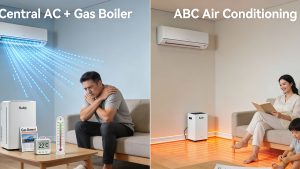
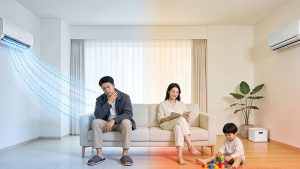
下午5:30,你准备下班。想到家里像个蒸笼,你提前用手机App打开了冷暖空调。等你到家,房间确实凉快了,但你一进门就被冷风直吹得肩膀发紧。你调低风速,结果温度又上来了。
深夜11点,你准备睡觉。室外温度终于降到了28℃,但卧室的空调还在嗡嗡地吹。你翻来覆去,不是因为热,而是因为那恼人的风感和噪音。
第二天,你刷到一条新闻:“未来AI将让空调学会预判天气”。你心里一动——如果空调能自己知道什么时候该开机、什么时候该储冷、什么时候该“闭嘴”,那该多好?
这不是幻想。当AI遇上一种叫做ABC空调系统的新物种,这一切正在成为现实。
先认识一下ABC:不是普通的空调
在谈论AI之前,我们得先搞清楚ABC是什么。
ABC空调系统,全称“基于空调伴侣的耦合式辐射空调系统”。三个字母代表三个部分:
- A = Air-source unit,传统的空气能室外机(热泵主机)
- B = Buddy unit,空调伴侣(国家实用新型专利ZL 2021 2 1195781.6)
- C = Conditioning unit,传统的室内机(风盘)
普通分体式空调,冷媒只在室外机和室内机之间来回跑。ABC空调多了一个“空调伴侣”,它连接着铺在地板下的PE水管网。就这么一个变化,带来了三个普通空调做不到的能力:
- 地板成了巨大的“温度电池”。冬天热水流过,地板蓄热;夏天冷水流过,地板蓄冷。即使室外机关机,地板还能持续释放冷热好几个小时。
- 能效天生就高。因为热力学循环被优化了(过冷度、过热度提升),同样一度电,ABC空调比普通热泵空调多搬20%~30%的热量。
- 无风感。地板辐射承担了大部分冷热负荷,室内机只需要微风辅助甚至可以不吹风。你终于可以告别“空调病”。
所以,ABC空调本质上是一台 “会储能的空调” 。它不只是一个冷暖空调,更是一个家庭微气候的管理平台。
普通空调的“笨”,AI也救不了
你可能会问:现在很多空调不也有智能功能吗?远程开关、温度感应、睡眠曲线……这些难道不够?
不够。因为普通空调的物理天花板太低了。
- 它没有储能能力。你让它提前开机,它只能硬吹,存不住冷热。
- 它只有一种换热方式——强对流(吹风)。你让它“温柔”,它就效率暴跌。
- 它在极端天气下性能衰减严重。-10℃以下,普通热泵空调制热能力打五折;43℃以上,制冷能力也打折。
AI再聪明,也没办法让一台没有“手”的机器人去弹钢琴。普通空调的硬件限制了它的上限。
但ABC空调系统不一样。它天生就有储能、有辐射、有高效换热。它像是一个既有“大脑”又有“肌肉”的运动员。AI要做的,就是给它装上“小脑”和“直觉”——让它学会预判。
当AI学会“看天”:预判式调节
想象一下这样的场景——
场景一:夏季,AI预判热浪
上午10点,ABC空调系统通过内置的AI模块,联网获取了未来6小时的天气预报:下午2点到5点,当地气温将升至38℃,湿度75%,体感温度42℃。同时,系统知道你家的光伏板(如果装了)在中午发电最猛。
AI做出决策:
- 11:00~13:00:利用光伏发电的峰值时段,让空调伴侣全力运行,但不是给室内吹冷风,而是把冷量全部存进地板下的PE管网。地板温度从26℃降到21℃。
- 13:00~16:00:室外最热的时候,你不在家。普通空调如果开着就是浪费,关着你回家就热。但ABC空调不一样——地板里的冷量足够维持室温26℃以下。室内机几乎不启动,只有水泵低速循环。
- 16:30:你收到App推送:“主人,今天下午热浪持续,我已提前储冷。您到家时室温24.5℃,无需开风机。”
- 18:00:你推门回家,迎面而来的是均匀的凉意,没有冷风,没有噪音。你光脚踩在地板上,一股清凉从脚底传来。
这就是预判式调节。AI不是为了炫技,而是为了平移时间——把白天的光伏电变成晚上的凉爽,把夜间的低谷电变成白天的温暖。
场景二:冬季,AI预判寒潮
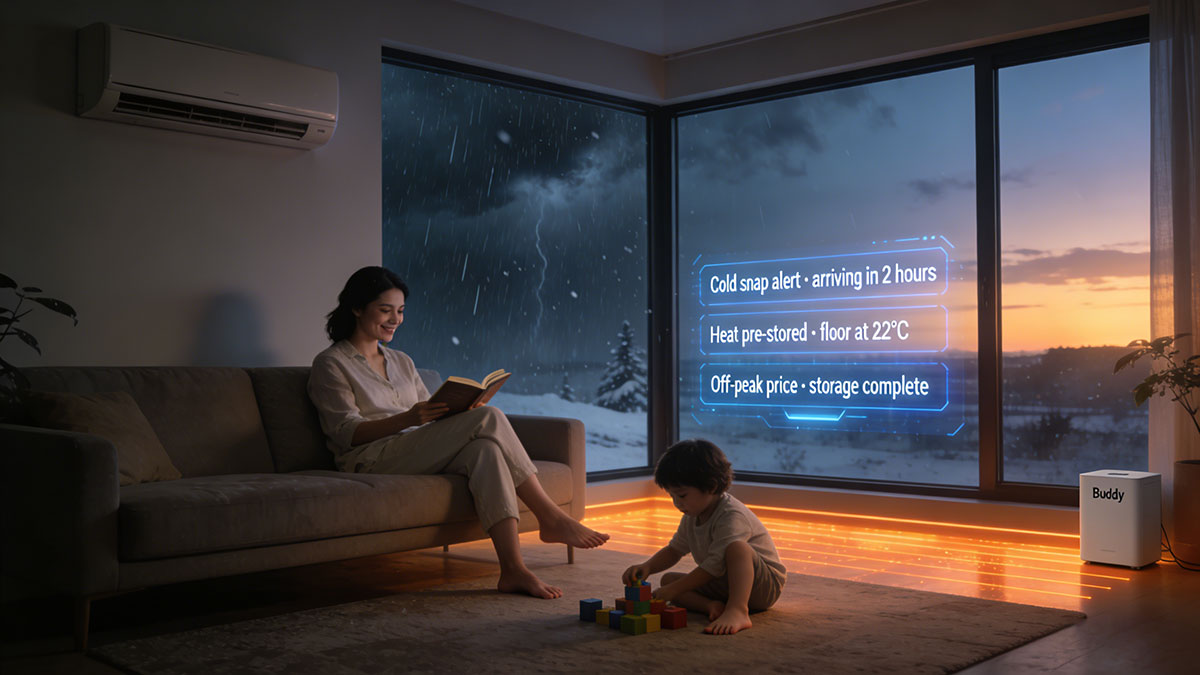
深夜2点,气象台发布了寒潮黄色预警:明天凌晨5点开始,气温将从-2℃骤降至-12℃。你的ABC空调系统收到推送。
AI算了一笔账:现在低谷电价0.3元/度,明天白天高峰电价0.9元/度。如果等到明天早上再开空调采暖,不仅贵,而且热泵在-12℃下启动需要时间才能达到高效区间。
于是AI自动执行“预储热”策略:
- 02:00~05:00:空调伴侣启动,热泵以COP 4.0的效率,把地板加热到30℃。地板下的PE管网储存了约15kWh的热量。
- 05:00~08:00:寒潮到达,室外-12℃。但你的地板还在源源不断地向上辐射热量,室温稳定在20℃。室内机几乎不需要启动辅助加热。
- 08:00~16:00:白天电价高峰,系统尽量不消耗电网电力。地板的热量一直用到下午才需要补充。
一整天下来,电费比“早上起来再开空调”的模式节省了60%以上。而你,甚至没有感觉到寒潮的到来——因为地板早就帮你“扛”住了。
从“被动响应”到“主动预判”:ABC+AI的三个层次
第一层:基于规则的自动化
这是最简单的智能。比如“当室温高于26℃时启动制冷”。几乎所有智能空调都有。缺点是死板,不会变通。
第二层:基于预测的优化
这就是上面两个场景展示的。AI不再只看当前温度,而是看未来——天气预报、电价波动、光伏出力预测、用户回家时间规律。然后提前做出最优决策:什么时候储热/冷,什么时候释放,什么时候用风机,什么时候只用辐射。
ABC空调的“地板电池”给了AI一个可操作的决策变量——储能。没有这个物理基础,AI再聪明也只能“即时吹风”,无法预判。
第三层:基于学习的个性化
这是真正“懂你”的阶段。
AI会学习你的生活习惯:
- 你每天早上6:30起床,喜欢卧室20℃。
- 你太太晚上10:00睡觉,喜欢卧室23℃。
- 你孩子下午3:00放学,喜欢客厅24℃且无风。
- 你周末经常睡到9:00,所以周末的预热要晚两小时。
AI还会学习你房子的热惯性:
- 你家是砖混结构,保温一般,但地板储能很好。
- 朝南的房间白天太阳辐射强,需要更早储冷。
- 厨房做饭时短时升温,不用立刻加大制冷,因为人只在里面待20分钟。
所有这些,AI会在后台默默学习、自动调整。你不需要设置任何曲线,也不需要每天手动开关。你只是正常生活,而ABC空调系统在悄悄地为你创造一个“无感”的舒适环境。
更远的未来:空调成为家庭能源的“调度官”
当AI与ABC深度融合,空调将不再是空调——它会成为家庭能源互联网的核心节点。
想象一下:
- 你家屋顶有光伏板,车库有电动汽车,墙上挂着储能电池。ABC空调的地板是另一个巨大的“热储能”。
- AI实时监控光伏发电、电价、天气、你的行程、电动汽车的剩余电量、电池的SOC。
- 中午光伏发电过剩时,AI决策:先给电池充电,电池满了就启动ABC空调储冷,储冷饱和了再给电动汽车充电,如果还有余电才卖到电网。
- 晚上电价高的时候,AI决策:优先使用电池里的电,其次是地板里的冷/热,最后才从电网取电。如果电网有需求响应(缺电),AI甚至可以主动减少用电或反向供电(通过提前储热/冷实现负荷转移)。
这不是科幻。这是虚拟电厂和需求侧响应正在变成的现实。而ABC空调,是普通家庭参与这场能源革命最理想的入口——因为它既能高效用能,又能大规模储能,成本远低于电池,寿命超过50年。
但AI不是万能的:ABC才是基础
我们必须清醒地认识到:AI只是算法,它不能创造物理能力。
如果一台空调没有储能能力,AI再厉害也只能“预测什么时候开机”,无法“预测后储存”。
如果一台空调只有强对流一种换热方式,AI再优化也无法消除风感。
如果一台热泵在-15℃就趴窝,AI再怎么预判寒潮也无力回天。
ABC空调系统的物理架构——空调伴侣+地板辐射+两级换热——赋予了AI一个前所未有的“操作平台”。反过来,AI让这个平台的潜力被彻底释放。
这就是为什么我们说:当AI遇上ABC,不是加法,是乘法。
回到标题的问题:未来的ABC空调会不会自己学会预判天气?
答案是:已经在路上了。
今天的ABC空调系统,已经具备了硬件层面的“可预测性”——它有储能、有辐射、有高效换热。接下来要做的,是把AI的预测算法、学习算法嵌入到控制芯片里。
这个未来并不遥远:
- 3年内:基于天气预报和电价的预储热/冷功能将出现在高端ABC空调上。
- 5年内:个性化学习算法普及,空调会根据你的生活习惯自动调整策略。
- 10年内:ABC空调成为家庭能源网关,与光伏、储能、电动车协同运行,参与虚拟电厂调度。
到那时,你再也不会问“今天要不要开空调”这种问题。因为你的ABC空调系统早就知道了——它不仅知道今天的天气,还知道明天的电价、你几点回家、甚至你今晚想不想吹风。
而你唯一需要做的,就是光着脚,踩在温暖或凉爽的地板上,忘记空调的存在。
结语:真正的智能,是让你忘记智能
我们经历了太多“伪智能”——冰箱能上网,但你只想让它安静制冷;洗衣机有几十种模式,但你只用“混合洗”。
真正的智能,不是让你有更多按钮可以按,而是让你不需要按按钮。
ABC空调系统 + AI,正在朝着这个方向进化。它不再是一个呼冷呼热的机器,而是一个 “会思考、会预判、会储能的家庭气候管家”。
当AI遇上ABC,未来的家,将是一个“无感”的家——没有风感,没有温度波动,没有电费焦虑,只有恰到好处的舒适。
而这一切,从你认识ABC空调开始。
(本文基于国家实用新型专利 ZL 2021 2 1195781.6 及发明专利申请 202510997961.2 撰写。AI部分为基于现有技术的合理展望。)
关键词列表
空调, ABC空调系统, 空调伴侣, 无风感空调, 空调采暖, 空调连地暖, 冷暖空调, 热泵空调, 空气能, 热泵, 分体式空调, 辐射空调, 预判式调节, 家庭储能, 空气能热泵, 地暖空调, 两联供, 虚拟电厂, 需求侧响应, 热泵采暖
When AI Meets ABC: Will Future ABC Air Conditioners Learn to Predict the Weather?
A Day in the Life of an Ordinary Commuter
7:30 AM. You rush out for work. The weather forecast says a high of 35°C today, but it’s still cool outside. You hesitate, then turn off the air conditioner — running it all day would waste too much electricity.
5:30 PM. You’re about to leave work. Thinking of your home as a steamer, you remotely turn on the heating and cooling air conditioner via your phone’s app. By the time you get home, the room is cool, but the direct draft hits your shoulders as soon as you walk in. You lower the fan speed, and the temperature creeps back up.
11:00 PM. Bedtime. The outdoor temperature has finally dropped to 28°C, but the air conditioner in your bedroom is still humming. You toss and turn — not because of the heat, but because of the annoying draft and noise.
The next day, you see a news headline: “AI Will Let Future Air Conditioners Predict the Weather.” Your heart skips a beat. What if an air conditioner could know when to start, when to store cooling, and when to just “shut up”?
This isn’t fantasy. When AI meets a new species called the ABC Air Conditioning System, this is becoming reality.
Meet ABC: Not Your Ordinary Air Conditioner
Before we talk about AI, we need to understand what ABC is.
The ABC Air Conditioning System stands for “Air Conditioner Buddy coupled radiant air conditioning system.” The three letters represent:
- A = Air-source unit (traditional outdoor air source unit, the heat pump)
- B = Buddy unit (Air Conditioner Buddy, National Utility Model Patent ZL 2021 2 1195781.6)
- C = Conditioning unit (traditional indoor fan coil unit)
In a conventional split-type air conditioner, the refrigerant only travels between the outdoor and indoor units. ABC air conditioning adds a “Buddy unit” that connects to a PE pipe network embedded under the floor. This single change brings three capabilities that ordinary air conditioners lack:
- The floor becomes a massive “thermal battery.” In winter, hot water flows through the floor, storing heat. In summer, chilled water stores coolness. Even if the outdoor unit shuts down, the floor continues to release stored energy for hours.
- Inherently higher efficiency. Because the thermodynamic cycle is optimized (increased subcooling and superheating), ABC moves 20–30% more heat per kilowatt-hour than a conventional heat pump air conditioner.
- Draft-free comfort. Floor radiation handles most of the heating/cooling load. The indoor unit only needs gentle airflow or can even stay off. You can finally say goodbye to “air conditioning sickness.”
In essence, ABC is an air conditioner that stores energy. It’s not just a heating and cooling air conditioner; it’s a home microclimate management platform.
The “Stupidity” of Ordinary Air Conditioners — Even AI Can’t Save It
You might ask: Don’t many air conditioners today have smart features? Remote control, temperature sensing, sleep curves… aren’t these enough?
Not enough. Because the physical ceiling of ordinary air conditioners is too low.
- No storage capability. If you turn it on early, it can only blow hard; it can’t store coolness or heat.
- Only one heat exchange method — forced convection (blowing air). If you ask it to be “gentle,” its efficiency plummets.
- Severe performance degradation in extreme weather. Below -10°C, a conventional heat pump air conditioner loses half its heating capacity. Above 43°C, its cooling capacity also drops.
No matter how smart AI is, it can’t make a robot without hands play the piano. The hardware of ordinary air conditioners limits their ceiling.
But the ABC Air Conditioning System is different. It naturally has storage, radiation, and high-efficiency heat exchange. It’s like an athlete with both a “brain” and “muscles.” AI’s job is to give it a “cerebellum” and “intuition” — to let it learn to predict.
When AI Learns to “Read the Sky”: Predictive Regulation
Imagine these scenarios —
Scenario 1: Summer, AI Predicts a Heatwave
10:00 AM. The ABC system, via its built-in AI module, gets the next 6-hour weather forecast: 2–5 PM, local temperature will hit 38°C, humidity 75%, heat index 42°C. The system also knows that your PV panels (if installed) generate most at noon.
AI makes a decision:
- 11:00–13:00: Use the peak PV generation period to run the Air Conditioner Buddy at full capacity — not to blow cold air into the room, but to store all the cooling into the underfloor PE pipe network. The floor temperature drops from 26°C to 21°C.
- 13:00–16:00: The hottest hours. You’re not home. An ordinary air conditioner would either waste energy if left on or leave you a hot home if off. But ABC is different — the cooling stored in the floor maintains the room temperature below 26°C. The indoor unit barely runs; only the pump circulates at low speed.
- 4:30 PM: You get an app notification: “Master, the heatwave continues this afternoon. I’ve pre-stored cooling. When you arrive, room temperature will be 24.5°C — no fan needed.”
- 6:00 PM: You walk in and feel even, gentle coolness — no draft, no noise. You walk barefoot on the floor, and a refreshing coolness rises from beneath your feet.
This is predictive regulation. AI isn’t showing off; it’s shifting time — turning daytime PV electricity into nighttime coolness, and nighttime off-peak electricity into daytime warmth.
Scenario 2: Winter, AI Predicts a Cold Snap
2:00 AM. The weather bureau issues a yellow cold snap warning: starting at 5 AM tomorrow, temperature will drop from -2°C to -12°C. Your ABC system receives the alert.
AI does the math: current off-peak electricity price $0.03/kWh, tomorrow daytime peak price $0.09/kWh. If you wait until morning to turn on air conditioning heating, not only will it be expensive, but the heat pump at -12°C will take time to reach its efficient range.
So AI automatically executes a “pre‑heat storage” strategy:
- 2:00–5:00 AM: The Buddy unit activates. The heat pump operates at COP 4.0, heating the floor to 30°C. The underfloor PE pipe network stores about 15 kWh of heat.
- 5:00–8:00 AM: The cold snap arrives. Outdoor temperature -12°C. But your floor continues radiating warmth, maintaining a steady 20°C indoors. The indoor unit barely needs auxiliary heating.
- 8:00 AM – 4:00 PM: Peak electricity prices. The system avoids drawing from the grid as much as possible. The floor’s stored heat lasts until afternoon before needing a top-up.
Over the day, electricity costs are more than 60% lower than the “turn on in the morning” mode. And you never even felt the cold snap — because the floor already “absorbed” it for you.
From Passive Response to Active Prediction: Three Levels of ABC+AI
Level 1: Rule-Based Automation
The simplest intelligence. For example, “turn on cooling when room temperature exceeds 26°C.” Almost all smart air conditioners have this. The drawback is rigidity — no adaptability.
Level 2: Prediction-Based Optimization
This is what the scenarios above demonstrate. AI no longer looks only at current temperature — it looks at the future: weather forecasts, electricity price fluctuations, PV generation forecasts, your return time patterns. Then it makes optimal decisions in advance: when to store heat/cool, when to release, when to use the fan, when to use only radiation.
ABC’s “floor battery” gives AI a controllable decision variable — energy storage. Without this physical foundation, no matter how smart AI is, it can only “blow on demand” and can’t predictively store.
Level 3: Learning-Based Personalization
This is the truly “understanding you” stage.
AI learns your habits:
- You wake up at 6:30 AM and like the bedroom at 20°C.
- Your spouse goes to bed at 10:00 PM and likes the bedroom at 23°C.
- Your child comes home at 3:00 PM and likes the living room at 24°C with no draft.
- You sleep in until 9:00 AM on weekends, so weekend pre‑heating should be delayed two hours.
AI also learns your home’s thermal inertia:
- Your house is brick-concrete with average insulation, but the floor stores heat well.
- South-facing rooms get strong solar radiation during the day and need earlier cooling storage.
- The kitchen heats up temporarily when cooking — no need to immediately crank up cooling, because people are only in there for 20 minutes.
All of this happens silently in the background, automatically adjusted. You don’t need to set any curves or manually toggle anything. You just live your life, and the ABC Air Conditioning System quietly creates an “imperceptible” comfort environment.
Further Future: The Air Conditioner as Home Energy Dispatcher
When AI and ABC deeply integrate, the air conditioner will no longer be an air conditioner — it will become the core node of a home energy internet.
Imagine:
- Your roof has PV panels, your garage has an EV, your wall has a battery. ABC’s floor is another massive thermal storage.
- AI monitors PV generation, electricity prices, weather, your schedule, EV battery level, and battery SOC in real time.
- At noon, when PV generation is surplus, AI decides: first charge the battery; when the battery is full, start ABC for cooling storage; when cooling storage is saturated, charge the EV; only then sell any remaining surplus to the grid.
- In the evening when electricity prices are high, AI decides: use battery power first, then stored heat/cool from the floor, and only finally draw from the grid. If the grid has a demand response event (power shortage), AI can actively reduce consumption or reverse supply (by shifting load via pre-stored heat/cool).
This isn’t science fiction. This is the reality of virtual power plants and demand-side response. And ABC is the ideal entry point for ordinary households to join this energy revolution — because it both uses energy efficiently and stores it at scale, at a fraction of the cost of batteries, with a lifespan exceeding 50 years.
But AI Is Not Omnipotent: ABC Is the Foundation
We must be clear: AI is just algorithms; it cannot create physical capabilities.
If an air conditioner has no storage capability, no matter how smart AI is, it can only “predict when to turn on/off” — it cannot “predict and then store.”
If an air conditioner has only forced convection, no amount of AI optimization can eliminate draft.
If a heat pump collapses at -15°C, no AI prediction of a cold snap can save it.
The physical architecture of the ABC Air Conditioning System — Buddy unit + floor radiation + two-stage heat exchange — gives AI an unprecedented “operating platform.” In return, AI unleashes the full potential of this platform.
That’s why we say: When AI meets ABC, it’s not addition — it’s multiplication.
Back to the Title Question: Will Future ABC Air Conditioners Learn to Predict the Weather?
The answer is: They’re already on the way.
Today’s ABC system already has the hardware-level “predictability” — storage, radiation, high-efficiency heat exchange. The next step is to embed AI prediction and learning algorithms into the control chip.
This future is not far:
- Within 3 years: Pre‑storage heating/cooling based on weather forecasts and electricity prices will appear on high-end ABC units.
- Within 5 years: Personalized learning algorithms will become common; the air conditioner will automatically adjust strategies based on your habits.
- Within 10 years: ABC will become a home energy gateway, coordinating with PV, storage, and EVs, participating in virtual power plant dispatch.
By then, you will never again ask “should I turn on the air conditioner today?” Because your ABC Air Conditioning System will already know — not only today’s weather, but tomorrow’s electricity prices, what time you’re coming home, and even whether you want a draft tonight.
And all you need to do is walk barefoot on the warm or cool floor, and forget that the air conditioner even exists.
Conclusion: True Intelligence Makes You Forget Intelligence
We’ve seen too much “fake intelligence” — refrigerators that connect to the internet when you just want them to keep food cold; washing machines with dozens of modes when you only use “mixed wash.”
True intelligence isn’t giving you more buttons to press. It’s making you not need to press buttons.
The ABC Air Conditioning System + AI is evolving in that direction. It’s no longer a machine that blows hot or cold on command. It’s a “thinking, predicting, storing home climate butler.”
When AI meets ABC, the home of the future will be an “imperceptible” home — no drafts, no temperature swings, no electricity bill anxiety — just perfectly calibrated comfort.
And it all starts with you getting to know ABC Air Conditioning.
(This article is based on National Utility Model Patent ZL 2021 2 1195781.6 and Invention Patent Application 202510997961.2. The AI portion is a reasonable outlook based on existing technologies.)
Keyword List
air conditioner, ABC air conditioning system, air conditioner buddy, draft-free air conditioner, air conditioning heating, air conditioning connected to underfloor heating, heating and cooling air conditioner, heat pump air conditioner, air source energy, heat pump, split-type air conditioner, radiant air conditioning, predictive regulation, home energy storage, air source heat pump, underfloor heating air conditioner, two-in-one system, virtual power plant, demand-side response, heat pump heating