Breaking the Efficiency Ceiling: How the “Air Conditioning Partner” Achieves Year-Round High Efficiency Through Subcooling and Superheat Control
In traditional air conditioning systems, efficiency improvements often face bottlenecks: insufficient superheat during summer cooling may cause compressor liquid slugging risks, while inadequate subcooling before throttling in winter heating can lead to system instability. These thermodynamic challenges limit the annual operational efficiency of air conditioning systems. However, the new coupled radiant air conditioning system launched by Huawa cleverly breaks this efficiency ceiling by introducing an innovative module called the “Air Conditioning Partner.” This system not only retains the convective heat transfer advantages of traditional air conditioning but also incorporates the comfort of radiant terminals, achieving a dual leap in both efficiency and user experience.
System Composition: Perfect Integration of Traditional Air Conditioning and Intelligent Partner
This coupled radiant air conditioning system consists of three core components. First, the traditional split air conditioning system serves as the foundation, including outdoor units (such as compressors, condensers, etc.) and indoor units (such as evaporators, fans, etc.), responsible for providing basic cooling and heating functions. Second, the “Air Conditioning Partner” acts as the intelligent incremental module and the key to performance enhancement: it enables efficient heat exchange between refrigerant and water media through a plate heat exchanger, drives water flow with a circulating pump, and incorporates PID control algorithms to real-time adjust parameters, ensuring optimal system operation. Finally, the radiant terminal system consists of an underground PE pipe network, serving as both an energy storage body and a radiant heat exchange surface. This design ensures the air conditioning system no longer operates in isolation but achieves a leap in overall efficiency through the series connection of the Air Conditioning Partner.
Working Principle: Precise Control of Subcooling and Superheat
The core innovation of the system lies in the active control of subcooling and superheat through the Air Conditioning Partner, thereby optimizing the thermodynamic cycle. In winter heating mode, the Air Conditioning Partner plays a critical role: high-temperature, high-pressure refrigerant discharged from the compressor first enters the plate heat exchanger in the Air Conditioning Partner, releasing part of its heat to the circulating water to achieve the first stage of condensation. This significantly increases the subcooling degree of the refrigerant, allowing more heat absorption per unit mass of refrigerant in the evaporator, directly improving the heating coefficient. Simultaneously, the Air Conditioning Partner prevents compressor liquid slugging by precisely controlling the water pump flow rate, ensuring stable system operation even in low-temperature environments. Traditional air conditioning systems often experience sharp efficiency drops under such extreme conditions, but with the support of the Air Conditioning Partner, the system’s Coefficient of Performance (COP) is comprehensively enhanced.
In summer cooling mode, the Air Conditioning Partner also plays a vital role. After the refrigerant completes the first stage of evaporation in the indoor unit, it flows into the Air Conditioning Partner for a second stage of evaporation, dissipating heat to the underground PE pipes through the water medium. This process significantly increases the system’s effective evaporation area and enhances the return gas superheat. High superheat not only avoids the risk of compressor liquid slugging but also optimizes evaporator utilization, thereby improving the cooling energy efficiency ratio. Compared to traditional air conditioning systems, this two-stage evaporation design ensures more efficient and stable operation during summer, while also reducing vertical temperature differences indoors through radiant cooling, providing a comfortable experience without drafts.
Technical Advantages: Triple Enhancement of Efficiency, Stability, and Comfort
With the introduction of the Air Conditioning Partner, this new air conditioning system demonstrates significant advantages across multiple dimensions. First, in terms of efficiency, the control of subcooling and superheat greatly improves the cooling and heating Coefficients of Performance (COP). For example, in winter, increased subcooling directly enhances heating capacity per unit; in summer, optimized superheat ensures full utilization of the evaporation process. This means users can achieve more efficient temperature control with lower energy consumption when using the air conditioning system, truly breaking the efficiency ceiling of traditional air conditioning.
Second, system stability is significantly enhanced. Through real-time monitoring and PID control, the Air Conditioning Partner effectively prevents issues such as compressor liquid slugging and refrigerant flash gas, ensuring reliable operation even under extreme weather conditions. While traditional air conditioning systems often suffer from efficiency drops or failures during low-temperature heating, this system, with the intelligent regulation of the Air Conditioning Partner, improves annual adaptability and robustness.
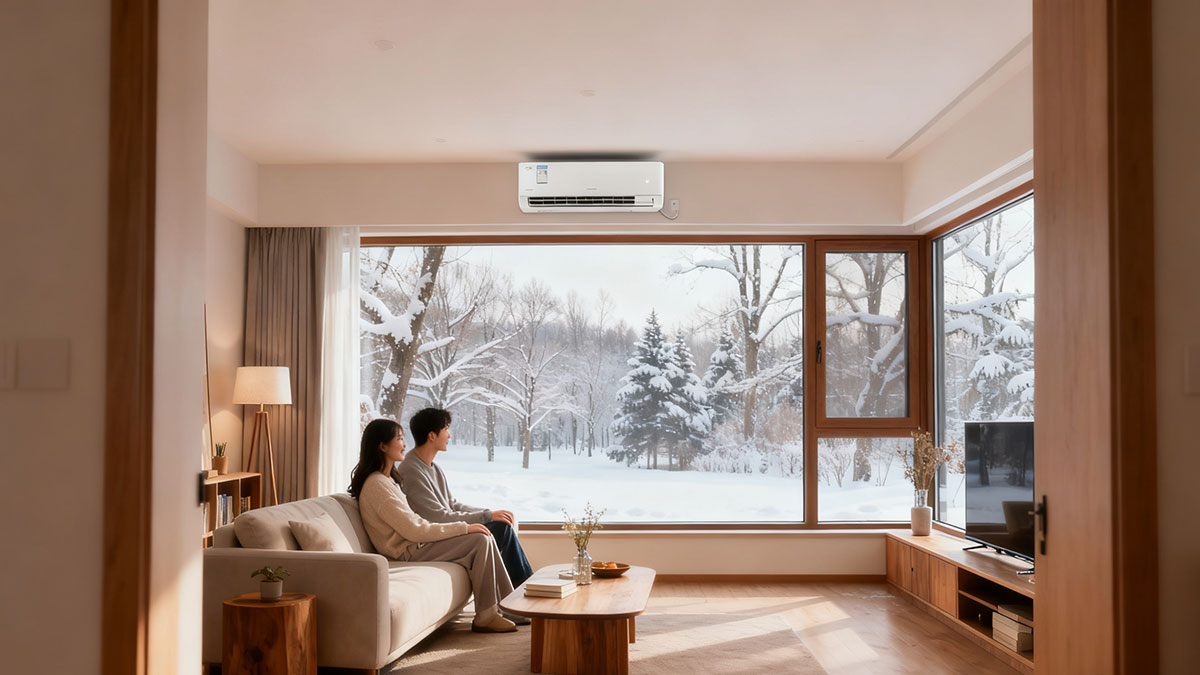
Finally, comfort achieves a qualitative leap. The combination of the Air Conditioning Partner and radiant terminals enables the system to provide both convective and radiant heat exchange, creating a uniform environment similar to a “Five Constant System” (constant temperature, humidity, oxygen, cleanliness, and quietness). When using the air conditioning system, users no longer suffer from strong direct airflow but enjoy a gentle and natural indoor climate.
Conclusion: Redefining the Future of Air Conditioning Systems
Huawa’s “Air Conditioning Partner” coupled radiant air conditioning system is not only a technological breakthrough but also an innovation in the traditional air conditioning model. By seamlessly integrating the Air Conditioning Partner with traditional air conditioning, the system achieves precise control of subcooling and superheat based on thermodynamic principles, enabling efficient year-round operation. For users seeking energy savings and comfort, this solution provides an ideal choice: air conditioning is no longer merely a temperature regulation tool but an intelligent and efficient partner for living. As market requirements for efficiency become increasingly stringent, this technology is poised to lead industry transformation and drive air conditioning systems toward higher levels of development.
Air Conditioning, Air Conditioning Partner, Coupled Radiant Air Conditioning System, Subcooling Degree, Superheat Degree, Energy Efficiency, Cooling, Heating, Plate Heat Exchanger, Circulating Water Pump, Radiant Terminal, PE Pipe, Comfort, Stability, Compressor, Condenser, Evaporator, Four-Way Valve, Throttling Device, PID Algorithm